
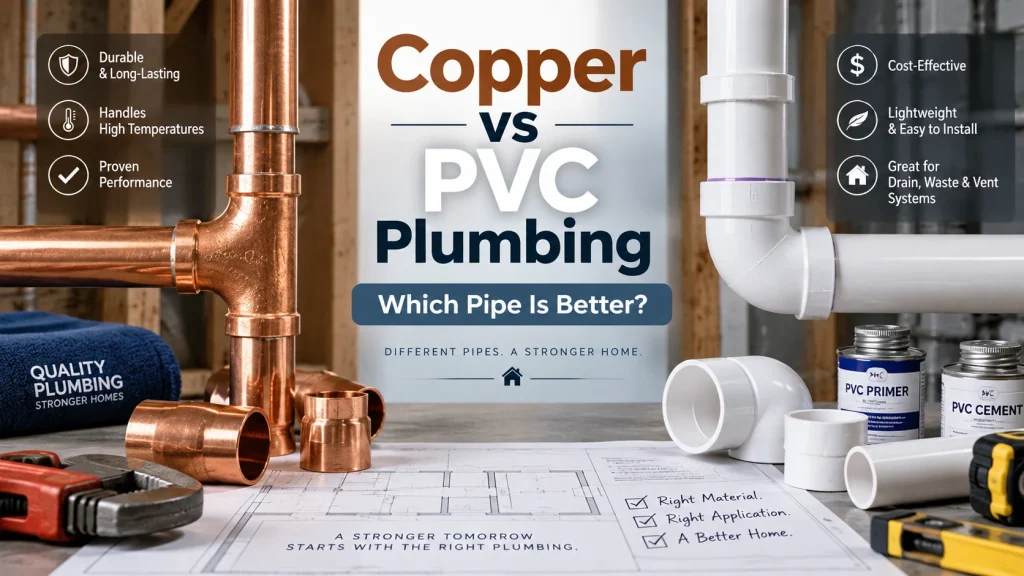
<p>Copper and PVC are both common plumbing materials, but they are not direct substitutes in every situation. Copper is widely used for pressurized hot- and cold-water lines, while PVC is more commonly installed in drainage, venting, and certain cold-water systems.</p>
<p>The right choice depends on what the pipe will carry, where it will be installed, and which materials local plumbing regulations allow.</p>
Copper Plumbing vs PVC: The Basic Difference
Copper is a rigid metal pipe joined with soldered, pressed, or approved mechanical fittings. It can carry hot and cold water and is also found in heating systems and older drainage installations.
PVC stands for polyvinyl chloride. It is a rigid, lightweight plastic pipe typically joined with primer and solvent cement. Different PVC products are manufactured for drainage and pressure applications, so the markings and ratings printed on the pipe must match its intended use.
Standard PVC should not be confused with CPVC. CPVC is a related material designed for higher operating temperatures. Ordinary PVC is generally unsuitable for domestic hot-water distribution, even when it carries a pressure rating.
Copper vs PVC Plumbing by Application
The purpose of the pipe is more important than the material’s general advantages. A product that works well for drainage may not be safe or code-compliant for a pressurized water line.
Hot and Cold Water Supply
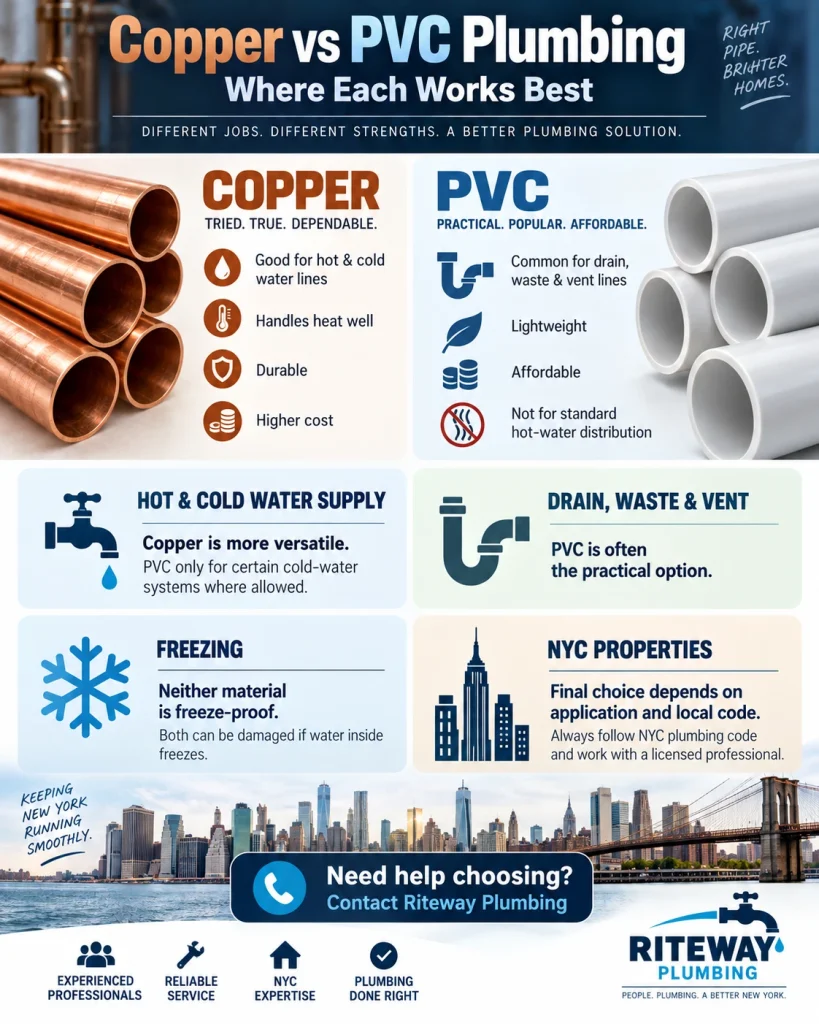
Copper can be used for both hot- and cold-water distribution. It tolerates higher temperatures than standard PVC, remains rigid after installation, and is available in different wall thicknesses.
PVC may be suitable for certain cold-water pressure systems when the product and local code allow it. If plastic piping is needed for hot water, a plumber may consider CPVC, PEX, or another approved material instead.
Pipes that carry drinking water must have the required certification. The New York City Plumbing Code requires water distribution materials to comply with applicable standards and NSF 61 requirements.
Drain, Waste, and Vent Lines
PVC is commonly used for drain, waste, and vent systems. It does not rust, has a smooth interior, and is available with fittings designed for changes in direction and branch connections.
Copper drainage pipe is still present in many older New York buildings. Although it is durable, installing a completely new copper drainage system is usually more expensive than using an approved plastic material.
During repairs, a plumber may connect new PVC to an existing copper drain with an approved transition fitting. The pipes must be aligned and properly supported to prevent leaks and restrictions.
Exposed and Concealed Plumbing
Copper is often practical in exposed mechanical areas because it is rigid and not vulnerable to ultraviolet damage in the same way as many plastics. It still needs protection from freezing, impact, and corrosive conditions.
PVC must be supported correctly and protected from physical damage, excessive sunlight, incompatible chemicals, and nearby heat sources. Installation should also allow for the material’s expansion and contraction.
Rules for concealed plastic piping can vary by building type and location. Multifamily and commercial properties may have additional fire-resistance and construction requirements.
How Copper and PVC Compare in Daily Use
Both materials can provide reliable service when selected and installed correctly. Their performance depends on water temperature, pressure, surrounding conditions, and workmanship.
Durability and Temperature
Copper handles hot water and elevated temperatures better than standard PVC. Its rigid construction also helps exposed pipe runs remain straight and stable.
However, copper is not immune to deterioration. Water chemistry, excessive flow velocity, poor installation, or contact with unsuitable materials can contribute to corrosion and pinhole leaks.
PVC does not corrode like metal, but it has lower temperature limits. Exposure to excessive heat can weaken or deform it. PVC should not be installed near boilers, flues, or other heat sources unless the specific product and installation are approved for that location.
Installation and Repairs
PVC is lightweight and relatively easy to cut. Its solvent-cemented fittings do not require soldering, but the pipe and fittings must be prepared and joined correctly. Poor alignment, insufficient cement, or movement before the joint sets can cause leaks.
Copper installation requires more skill and may involve soldering or specialized press tools. Repairs in tight spaces can be more difficult, especially when an open flame cannot be used safely.
Copper typically costs more in both materials and labor. PVC is generally less expensive, although choosing a pipe based only on price can lead to problems if it is unsuitable for the application.
Expected Service Life
There is no single lifespan that applies to every copper or PVC system. Water chemistry, temperature, pressure, pipe support, environmental exposure, and installation quality all affect longevity.
Copper can remain in service for decades but may fail early in corrosive conditions. PVC avoids metallic corrosion, yet sunlight, excessive heat, impact, incompatible chemicals, and poorly assembled joints can shorten its useful life.
Active leaks, cracked fittings, corrosion, recurring blockages, and multiple previous repairs are more useful indicators of pipe condition than age alone.
Performance in Freezing Conditions
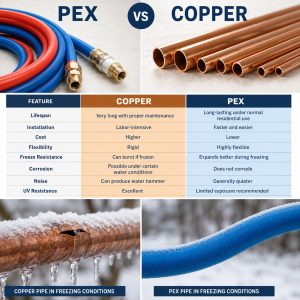
Neither copper nor PVC is freeze-proof. Water trapped inside either material can freeze and create enough pressure to damage the pipe or its fittings.
Copper may split along the pipe wall, while PVC can crack at a fitting or along the pipe. Replacing one material with the other will not correct a freezing problem caused by drafts, inadequate insulation, or loss of heat.
Pipes in basements, exterior walls, crawl spaces, and other cold areas need appropriate insulation and protection regardless of material.
Choosing Between PVC and Copper Plumbing
The final decision should be based on the part of the system being repaired or installed.
Connecting Copper and PVC
Copper and PVC can be connected when an approved transition fitting is used. The required connection depends on whether the pipe carries drinking water, wastewater, or another medium.
Improvised adapters, incompatible adhesives, and poorly matched threads can leak. Differences in pipe dimensions and movement must also be considered.
Before connecting new material to an older line, a plumber should check the surrounding pipe. A new fitting attached to a badly corroded or poorly supported section may simply move the problem to the next connection.
What Works Best in a New York Property?
For domestic hot- and cold-water distribution, copper is the more versatile of these two materials. For drain, waste, and vent piping, PVC is often the more practical option where code permits it. PVC may also be used in certain cold-water pressure systems when the pipe is properly rated and approved.
New York City requirements depend on the application, building type, and location of the piping. A plastic material accepted for one property may be restricted in another. Plumbing work may also require permits, inspections, and installation by a licensed professional.
When comparing PVC vs copper plumbing, consider water temperature, pressure, accessibility, existing materials, and code requirements – not just installation cost.
If you are planning a repair or renovation, contact Riteway Plumbing for professional plumbing service in New York. A qualified plumber can inspect the existing system and recommend the appropriate pipe material for each part of the project.