
Water pressure should be strong enough for comfortable daily use without placing unnecessary stress on pipes and fixtures. When incoming pressure is too high, a pressure-reducing valve controls it before the water moves through the building.
A failing regulator may cause sudden pressure changes, noisy plumbing, recurring fixture leaks, or weak flow throughout the property. Because several other plumbing problems produce similar symptoms, the valve should be tested before it is adjusted or replaced.
What Is a PRV in Plumbing?
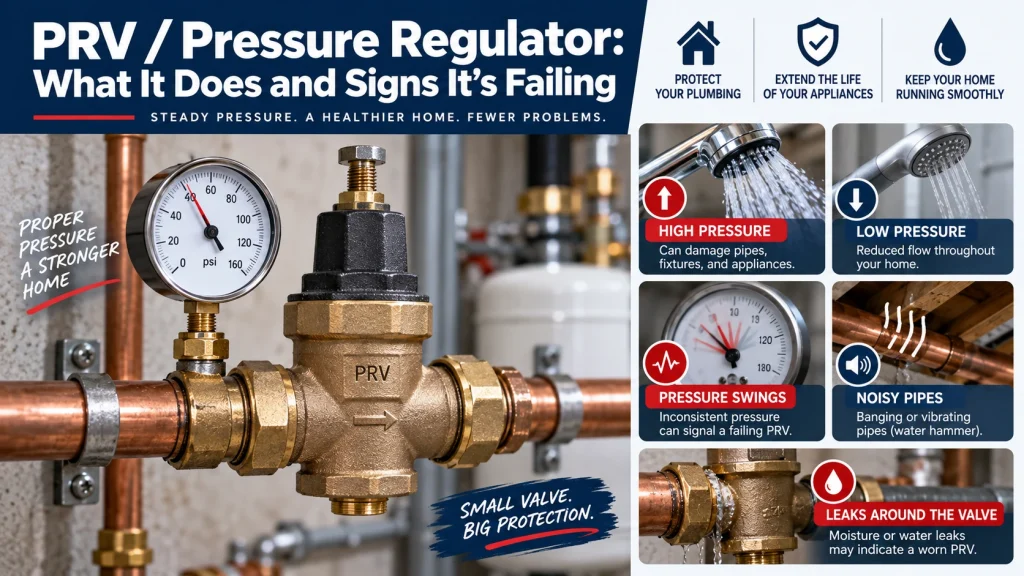
A PRV, or pressure-reducing valve, is installed on the main water supply line. Its purpose is to lower incoming water pressure and maintain a more suitable pressure inside the property.
So, what is a pressure regulator in plumbing? It is another common name for the same type of device. The regulator protects faucets, toilets, water heaters, appliance connections, and other plumbing components from excessive pressure.
A PRV usually contains a spring, diaphragm, and valve seat. These components respond to pressure on the downstream side of the system. When pressure reaches the selected setting, the valve restricts the incoming flow. When fixtures are opened, it adjusts to allow more water through.
The regulator does not increase pressure. If municipal pressure is already low, installing or adjusting a PRV will not create a stronger supply.
Why Water Pressure Needs to Be Controlled
Excessive pressure can strain faucet cartridges, toilet fill valves, flexible supply hoses, washing-machine connections, and water heater components. It may also increase water use whenever a fixture is opened.
A working regulator keeps pressure more consistent as demand changes. This helps protect the system while still providing enough flow for showers, sinks, and appliances.
In New York apartment buildings, pressure may be controlled by several regulators and booster pumps serving different floors. A pressure issue in one apartment may therefore involve shared building equipment rather than an individual valve.
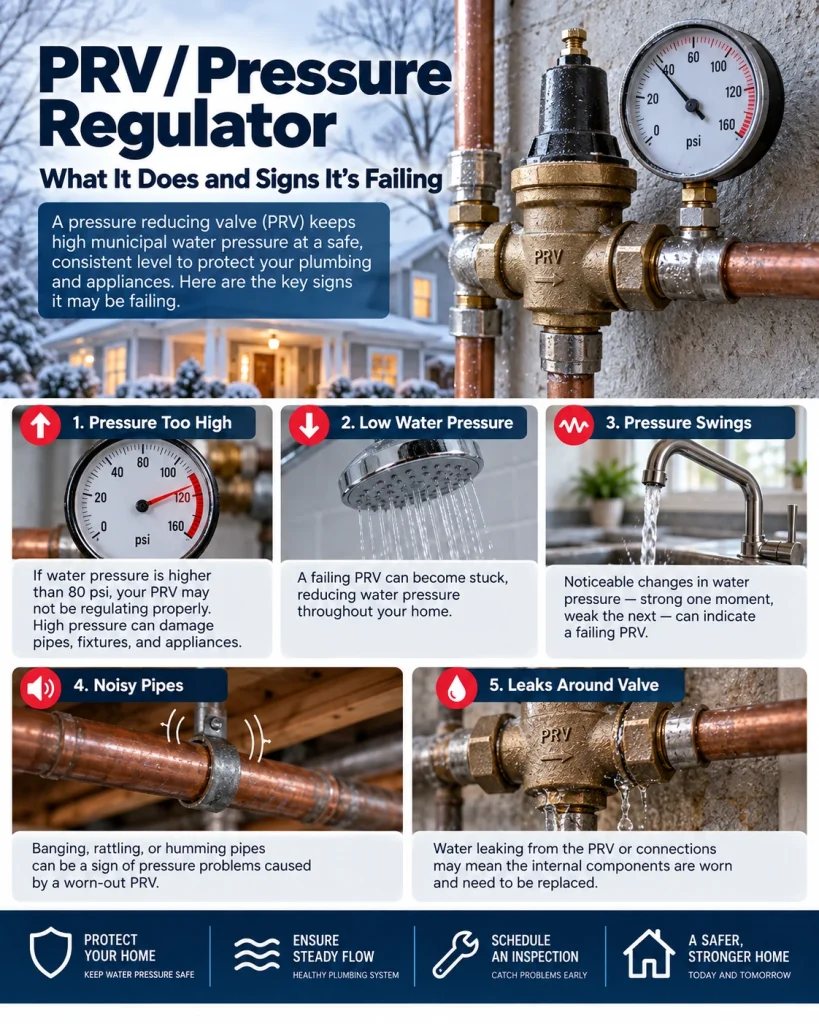
Signs the Pressure Regulator Is Failing
PRVs can wear internally or become affected by sediment and mineral buildup. Depending on the problem, a failing valve may allow too much pressure through or restrict the supply.
Pressure Suddenly Feels Too High
Unusually forceful flow is one of the most noticeable warning signs. Faucets may splash, toilets may fill loudly, and flexible supply lines may begin leaking.
Strong flow at one fixture does not confirm a faulty PRV. If the change affects several hot- and cold-water fixtures, the regulator or main supply is more likely to be involved.
Water Pressure Is Low Throughout the Home
A damaged or obstructed regulator can restrict water entering the building. Showers may feel weak, and pressure may drop sharply when several fixtures are used at once.
Low pressure can also result from a partially closed main valve, a leak, clogged piping, or a problem with the municipal supply. If only one faucet has weak flow, check its aerator or cartridge before suspecting the main regulator.
Pressure Changes During the Day
A worn PRV may stop holding a stable setting. Water pressure can alternate between weak and unusually strong or surge when a faucet is first opened.
Municipal pressure may also vary, especially when neighborhood demand changes. A functioning regulator should reduce the effect of those variations inside the property.
Pipes or Fixtures Become Noisy
Whistling, vibration, banging pipes, and loud toilet valves can be related to excessive or unstable pressure. However, these sounds may also come from loose piping, worn fixture parts, or fast-closing appliance valves.
Noise is a reason to inspect the system, but it is not enough to diagnose the regulator by itself.
Water Appears Around the Valve
Moisture around the PRV body, adjustment stem, or connections may indicate a damaged seal, corrosion, or a leaking fitting. Tightening the adjustment screw will not repair a physical leak and may change the pressure setting.
A leaking regulator should be inspected promptly, particularly if it is installed near finished walls, flooring, or electrical equipment.
What Is Pressure Creep?
Pressure creep happens when downstream pressure slowly rises above the regulator’s setting while no water is being used. A worn or dirty valve seat may allow higher incoming pressure to pass through gradually.
A similar increase can occur when a water heater warms the water in a closed plumbing system. This is known as thermal expansion and may indicate a problem with the expansion tank rather than the PRV.
A pressure gauge and a professional inspection can distinguish between regulator failure and thermal expansion. Replacing the PRV without identifying the source may leave the original problem unresolved.
How a Plumber Tests the PRV
When a homeowner asks what is a PRV in plumbing and whether theirs is failing, the most useful first step is a pressure test.
A plumber measures static pressure while all fixtures are closed and checks working pressure while water is running. Pressure may also be monitored over time to identify unexplained increases.
The test helps determine whether the regulator is:
- Allowing excessive pressure through
- Restricting the water supply
- Failing to maintain a stable setting
- Operating normally while another component causes the problem
The plumber may also inspect the main shutoff, expansion tank, nearby fittings, and visible supply piping.
Should the PRV Be Adjusted or Replaced?
Many pressure regulators have an adjustment screw, but turning it is not always the correct solution. Adjustment cannot repair a worn diaphragm, damaged valve seat, corroded body, or leaking seal.
If the valve is in good condition and pressure is simply set incorrectly, adjustment may restore normal operation. If pressure remains unstable or the regulator cannot hold its setting, replacement is usually the more dependable option.
The new PRV must match the pipe size, expected water demand, and incoming pressure. Once installed, it should be tested under both static and flowing conditions.
Have Your Water Pressure Checked
High, low, or inconsistent pressure does not always mean the PRV has failed, but it should not be ignored. Continued pressure problems can damage fixtures, increase the likelihood of leaks, and affect everyday water use.
If pressure has changed throughout your home or you are unsure what is a PRV in plumbing, contact Riteway Plumbing for professional plumbing service in New York. A proper pressure test can identify whether the regulator needs adjustment, replacement, or no work at all.